1. Introduction
Head and neck squamous cell carcinoma (HNSCC) comprises a heterogeneous group of epithelial malignancies arising mainly from the mucosal lining of the oral cavity, oropharynx, hypopharynx and larynx. It is not a single uniform disease entity; rather, tumour site, stage, nodal status, histological differentiation, viral association and patient-related factors create wide variation in clinical behaviour, treatment response and prognosis. HNSCC remains an important global health problem because it causes substantial morbidity and mortality and often affects essential functions such as speech, swallowing, airway protection, nutrition, facial appearance and social wellbeing
| [1] | Sung, H., Ferlay, J., Siegel, R. L., Laversanne, M., Soerjomataram, I., Jemal, A., Bray, F. Global Cancer Statistics 2020: GLOBOCAN Estimates of Incidence and Mortality Worldwide for 36 Cancers in 185 Countries. CA: A Cancer Journal for Clinicians. 2021, 71(3), 209-249.
https://doi.org/10.3322/caac.21660 |
| [2] | Bray, F., Laversanne, M., Sung, H., Ferlay, J., Siegel, R. L., Soerjomataram, I., Jemal, A. Global Cancer Statistics 2022: GLOBOCAN Estimates of Incidence and Mortality Worldwide for 36 Cancers in 185 Countries. CA: A Cancer Journal for Clinicians. 2024, 74(3), 229-263.
https://doi.org/10.3322/caac.21834 |
| [3] | Johnson, D. E., Burtness, B., Leemans, C. R., Lui, V. W. Y., Bauman, J. E., Grandis, J. R. Head and Neck Squamous Cell Carcinoma. Nature Reviews Disease Primers. 2020, 6(1), 92.
https://doi.org/10.1038/s41572-020-00224-3 |
[1-3]
.
The major etiological factors for HNSCC include tobacco smoking, smokeless tobacco, alcohol consumption, betel quid or areca nut chewing, poor oral hygiene and oncogenic viral infections, particularly human papillomavirus in oropharyngeal cancer and Epstein–Barr virus in nasopharyngeal carcinoma
| [3] | Johnson, D. E., Burtness, B., Leemans, C. R., Lui, V. W. Y., Bauman, J. E., Grandis, J. R. Head and Neck Squamous Cell Carcinoma. Nature Reviews Disease Primers. 2020, 6(1), 92.
https://doi.org/10.1038/s41572-020-00224-3 |
| [4] | International Agency for Research on Cancer. A Review of Human Carcinogens: Personal Habits and Indoor Combustions. IARC Monographs on the Evaluation of Carcinogenic Risks to Humans, Volume 100E. Lyon, France: International Agency for Research on Cancer; 2012. |
[3, 4]
. These exposures are especially relevant in South Asian countries, where tobacco, betel quid and related oral habits remain common. In Bangladesh, lip and oral cavity cancers are among the leading malignancies, and the burden is intensified by delayed diagnosis, low awareness, socioeconomic barriers and limited access to specialized oncology services
. Consequently, many patients present with advanced or functionally significant disease, where treatment must balance tumour control, organ preservation, toxicity and feasibility.
The management of head and neck cancer depends on anatomical site, tumour extent, nodal involvement, performance status, expected functional outcome and available treatment facilities. Early-stage disease can often be managed successfully with surgery or radiotherapy alone. However, advanced non-metastatic squamous cell carcinoma usually requires combined-modality treatment because radiotherapy alone, although organ-preserving and potentially curative, may provide insufficient locoregional control in more extensive disease. Radiotherapy remains a cornerstone of management because squamous cell carcinoma is radiosensitive and many tumours arise in anatomically critical sites where preservation of voice, swallowing and appearance is clinically important
| [7] | Bourhis, J., Overgaard, J., Audry, H., Ang, K. K., Saunders, M., Bernier, J., et al. Hyperfractionated or Accelerated Radiotherapy in Head and Neck Cancer: A Meta-analysis. Lancet. 2006, 368(9538), 843-854.
https://doi.org/10.1016/S0140-6736(06)69121-6 |
[7]
.
Concurrent chemoradiotherapy has become a major treatment approach for suitable patients with locally advanced HNSCC. The rationale for combining chemotherapy with radiotherapy includes radiosensitisation, inhibition of DNA repair, enhancement of tumour cell kill and possible control of microscopic systemic disease. Cisplatin is the most widely studied concurrent agent and has shown clinically meaningful benefit when added to definitive radiotherapy. Meta-analytic evidence from the MACH-NC group has consistently demonstrated that chemotherapy provides its greatest survival benefit when delivered concurrently with radiotherapy rather than as induction or adjuvant treatment
| [8] | Pignon, J. P., Bourhis, J., Domenge, C., Designe, L.; MACH-NC Collaborative Group. Chemotherapy Added to Locoregional Treatment for Head and Neck Squamous-cell Carcinoma: Three Meta-analyses of Updated Individual Data. Lancet. 2000, 355(9208), 949-955.
https://doi.org/10.1016/S0140-6736(00)90011-4 |
| [9] | Pignon, J. P., le Maître, A., Maillard, E., Bourhis, J.; MACH-NC Collaborative Group. Meta-analysis of Chemotherapy in Head and Neck Cancer: An Update on 93 Randomised Trials and 17,346 Patients. Radiotherapy and Oncology. 2009, 92(1), 4-14. https://doi.org/10.1016/j.radonc.2009.04.014 |
| [10] | Lacas, B., Carmel, A., Landais, C., Wong, S. J., Licitra, L., Tobias, J. S., et al. Meta-analysis of Chemotherapy in Head and Neck Cancer: An Update on 107 Randomized Trials and 19,805 Patients. Radiotherapy and Oncology. 2021, 156, 281-293. https://doi.org/10.1016/j.radonc.2021.01.013 |
[8-10]
.
Several randomized studies support the superiority of concurrent chemoradiotherapy over radiotherapy alone in selected patients. Adelstein and colleagues demonstrated improved disease control and treatment outcome with concurrent chemotherapy and radiotherapy compared with radiotherapy alone in advanced squamous cell carcinoma of the head and neck
| [11] | Adelstein, D. J., Saxton, J. P., Rybicki, L. A., Esclamado, R. M., Wood, B. G., Strome, M., et al. A Phase III Randomized Trial Comparing Concurrent Chemotherapy and Radiotherapy with Radiotherapy Alone in Resectable Stage III and IV Squamous Cell Head and Neck Cancer. Head & Neck. 1997, 19(7), 567-575.
https://doi.org/10.1002/(SICI)1097-0347(199710)19:7%3C567::AID-HED2%3E3.0.CO;2-5 |
| [12] | Adelstein, D. J., Lavertu, P., Saxton, J. P., Secic, M., Wood, B. G., Wanamaker, J. R., et al. Mature Results of a Phase III Randomized Trial Comparing Concurrent Chemoradiotherapy with Radiation Therapy Alone in Patients with Stage III and IV Squamous Cell Carcinoma of the Head and Neck. Cancer. 2000, 88(4), 876-883.
https://doi.org/10.1002/(SICI)1097-0142(20000215)88:4%3C876::AID-CNCR19%3E3.0.CO;2-Y |
| [13] | Adelstein, D. J., Li, Y., Adams, G. L., Wagner, H. Jr., Kish, J. A., Ensley, J. F., et al. An Intergroup Phase III Comparison of Standard Radiation Therapy and Two Schedules of Concurrent Chemoradiotherapy in Patients with Unresectable Squamous Cell Head and Neck Cancer. Journal of Clinical Oncology. 2003, 21(1), 92-98. https://doi.org/10.1200/JCO.2003.01.008 |
[11-13]
. Jeremic et al. also reported improved response, local control and survival with concurrent low-dose platinum-based chemoradiotherapy compared with radiotherapy alone in locally advanced unresectable disease
| [14] | Jeremic, B., Shibamoto, Y., Stanisavljevic, B., Milojevic, L., Milicic, B., Nikolic, N. Radiation Therapy Alone or with Concurrent Low-dose Daily Either Cisplatin or Carboplatin in Locally Advanced Unresectable Squamous Cell Carcinoma of the Head and Neck: A Prospective Randomized Trial. Radiotherapy and Oncology. 1997, 43(1), 29-37.
https://doi.org/10.1016/S0167-8140(97)00048-0 |
[14]
. These findings established concurrent chemoradiotherapy as an important treatment strategy for improving locoregional control in advanced HNSCC.
Organ-preservation studies further strengthened the role of concurrent treatment. In advanced laryngeal cancer, concurrent cisplatin and radiotherapy improved larynx preservation and locoregional control compared with radiotherapy alone, and long-term follow-up confirmed its durable contribution to non-surgical management
| [15] | Forastiere, A. A., Goepfert, H., Maor, M., Pajak, T. F., Weber, R., Morrison, W., et al. Concurrent Chemotherapy and Radiotherapy for Organ Preservation in Advanced Laryngeal Cancer. New England Journal of Medicine. 2003, 349(22), 2091-2098. https://doi.org/10.1056/NEJMoa031317 |
| [16] | Forastiere, A. A., Zhang, Q., Weber, R. S., Maor, M. H., Goepfert, H., Pajak, T. F., et al. Long-Term Results of RTOG 91-11: A Comparison of Three Nonsurgical Treatment Strategies to Preserve the Larynx in Patients with Locally Advanced Larynx Cancer. Journal of Clinical Oncology. 2013, 31(7), 845-852.
https://doi.org/10.1200/JCO.2012.43.6097 |
[15, 16]
. Contemporary clinical practice guidelines therefore recommend cisplatin-based concurrent chemoradiotherapy as a preferred definitive treatment for fit patients with locally advanced squamous cell carcinoma of the head and neck
| [17] | Machiels, J. P., Leemans, C. R., Golusinski, W., Grau, C., Licitra, L., Gregoire, V. Squamous Cell Carcinoma of the Oral Cavity, Larynx, Oropharynx and Hypopharynx: EHNS-ESMO-ESTRO Clinical Practice Guidelines for Diagnosis, Treatment and Follow-up. Annals of Oncology. 2020, 31(11), 1462-1475. https://doi.org/10.1016/j.annonc.2020.07.011 |
[17]
.
Despite these benefits, concurrent chemoradiotherapy is associated with greater acute toxicity than radiotherapy alone. Patients may develop mucositis, dysphagia, nausea, vomiting, xerostomia, skin reaction, haematological toxicity, nephrotoxicity, ototoxicity, weight loss and nutritional compromise
| [13] | Adelstein, D. J., Li, Y., Adams, G. L., Wagner, H. Jr., Kish, J. A., Ensley, J. F., et al. An Intergroup Phase III Comparison of Standard Radiation Therapy and Two Schedules of Concurrent Chemoradiotherapy in Patients with Unresectable Squamous Cell Head and Neck Cancer. Journal of Clinical Oncology. 2003, 21(1), 92-98. https://doi.org/10.1200/JCO.2003.01.008 |
| [17] | Machiels, J. P., Leemans, C. R., Golusinski, W., Grau, C., Licitra, L., Gregoire, V. Squamous Cell Carcinoma of the Oral Cavity, Larynx, Oropharynx and Hypopharynx: EHNS-ESMO-ESTRO Clinical Practice Guidelines for Diagnosis, Treatment and Follow-up. Annals of Oncology. 2020, 31(11), 1462-1475. https://doi.org/10.1016/j.annonc.2020.07.011 |
| [18] | Szturz, P., Vermorken, J. B., Licitra, L., Bhide, S., Dinis, J., Bourhis, J., et al. Cisplatin Eligibility Issues and Alternative Regimens in Locoregionally Advanced Head and Neck Cancer: Recommendations for Clinical Practice. Frontiers in Oncology. 2019, 9, 464. https://doi.org/10.3389/fonc.2019.00464 |
[13, 17, 18]
. These adverse effects can impair treatment compliance, increase supportive care requirements and sometimes lead to treatment interruption. Moreover, not all patients are suitable candidates for cisplatin-based chemotherapy because of older age, poor performance status, renal dysfunction, hearing impairment, comorbidity or poor nutritional reserve
| [18] | Szturz, P., Vermorken, J. B., Licitra, L., Bhide, S., Dinis, J., Bourhis, J., et al. Cisplatin Eligibility Issues and Alternative Regimens in Locoregionally Advanced Head and Neck Cancer: Recommendations for Clinical Practice. Frontiers in Oncology. 2019, 9, 464. https://doi.org/10.3389/fonc.2019.00464 |
[18]
. Therefore, radiotherapy alone remains clinically relevant for patients who are unfit for chemotherapy or for settings where combined treatment cannot be delivered safely.
This issue is particularly important in resource-constrained settings such as Bangladesh. Many patients come from rural areas and low-income families, while access to radiotherapy machines, chemotherapy support, imaging, nutritional care and regular follow-up may be limited
. In such circumstances, treatment decisions should not depend only on expected tumour response; they must also consider affordability, toxicity, treatment completion and real-world feasibility. Local clinical evidence is therefore necessary to evaluate whether the improved response expected from concurrent chemoradiotherapy can be achieved with acceptable and manageable toxicity.
Considering these clinical and practical issues, the present study was undertaken to compare concurrent chemoradiation with radiation alone in patients with advanced non-metastatic squamous cell carcinoma of the head and neck. The study focused on two principal outcomes: local tumour response and treatment-related adverse effects. It was hypothesized that concurrent chemoradiation would produce a better treatment response than radiotherapy alone, although with a higher but manageable burden of acute toxicity. The findings may help guide treatment decisions in similar resource-limited oncology settings where both efficacy and tolerability are essential considerations.
3. Materials and Methods
3.1. Study Design, Reporting Framework, Study Setting and Period
This was a single-centre, prospective, two-arm, non-randomized comparative clinical study conducted to compare treatment response and acute adverse effects between concurrent chemoradiotherapy and radiotherapy alone in patients with non-metastatic squamous cell carcinoma of the head and neck. The original thesis described the design as a cross-sectional comparative analytical study; however, for manuscript reporting, the study is presented as a prospective comparative study because patients were allocated to treatment arms and followed during treatment and up to 6 weeks after completion of therapy. The manuscript was prepared in accordance with the Strengthening the Reporting of Observational Studies in Epidemiology recommendations where applicable
| [19] | von Elm, E., Altman, D. G., Egger, M., Pocock, S. J., Gøtzsche, P. C., Vandenbroucke, J. P.; STROBE Initiative. The Strengthening the Reporting of Observational Studies in Epidemiology (STROBE) Statement: Guidelines for Reporting Observational Studies. Lancet. 2007, 370(9596), 1453-1457.
https://doi.org/10.1016/S0140-6736(07)61602-X |
[19]
. The study was carried out in the Department of Radiotherapy, Rajshahi Medical College Hospital, Rajshahi, Bangladesh. The overall study period was from January 2014 to December 2014, while patient recruitment and primary data collection were conducted from January 2014 to July 2014. All eligible patients were selected from the outpatient department of Radiotherapy, Rajshahi Medical College Hospital.
3.2. Study Population and Eligibility Criteria
The study population comprised patients with clinically diagnosed and histologically confirmed squamous cell carcinoma of the head and neck. Eligible tumour sites included cancers of the oral cavity, oropharynx and larynx. Patients were included if they had non-metastatic disease within the predefined TNM categories and were considered suitable for definitive radiotherapy with or without concurrent chemotherapy. Patients were eligible for inclusion if they fulfilled all of the following criteria: histologically confirmed squamous cell carcinoma of the head and neck; TNM stage T2–T4, N0–N2, M0; age between 20 and 70 years; Karnofsky Performance Status score of 60 or above; and either sex. Tumour staging was performed according to the seventh edition of the American Joint Committee on Cancer TNM staging system
| [20] | Edge, S. B., Byrd, D. R., Compton, C. C., Fritz, A. G., Greene, F. L., Trotti, A., editors. AJCC Cancer Staging Manual. 7th ed. New York, NY: Springer; 2010.
https://doi.org/10.1007/978-0-387-88441-7 |
[20]
. Functional status was assessed using the Karnofsky Performance Status scale
| [21] | Karnofsky, D. A., Burchenal, J. H. The Clinical Evaluation of Chemotherapeutic Agents in Cancer. In Evaluation of Chemotherapeutic Agents, MacLeod, C. M., Ed.; New York, NY: Columbia University Press; 1949, pp. 191-205. |
[21]
.
Patients were excluded if they had histology other than squamous cell carcinoma, prior treatment for head and neck cancer, previous surgery for the presenting cancer, distant metastasis, Karnofsky Performance Status score below 60, renal impairment, or diabetes mellitus.
3.3. Sample Size
The sample size was calculated using the formula for estimating a proportion in an infinite population:
where Z = 1.96 at 95% confidence level, p = 0.20, q = 1 − p = 0.80, and d = 0.05 as the acceptable margin of error. This produced an initial sample size of approximately 245.86. Because the annual number of head and neck cancer patients treated in the department during the preceding year was 90, the sample size was corrected for a finite population using the formula:
where N = 90. The corrected sample size was 65.95, which was rounded to 66. Therefore, a total of 66 patients were enrolled and allocated equally into two treatment groups, with 33 patients in each arm.
3.4. Sampling Technique and Allocation
A non-probability purposive sampling technique was used. After eligibility screening and counselling, every alternate eligible patient was assigned to one of the two treatment arms. Group A received concurrent chemoradiotherapy, while Group B received radiotherapy alone. Because treatment allocation was based on alternate assignment rather than concealed randomization, the study should not be described as a randomized controlled trial.
3.5. Treatment Interventions
3.5.1. Concurrent Chemoradiotherapy Group
Patients in Group A received external beam radiotherapy with concurrent cisplatin. Radiotherapy was delivered using a telecobalt machine. The prescribed radiation dose was 60 Gy in 30 fractions, delivered as 2 Gy per fraction, 5 fractions per week, over 6 weeks. Concurrent chemotherapy consisted of cisplatin 70 mg/m2, administered every 3 weeks for a planned total of three cycles during the course of radiotherapy.
3.5.2. Radiotherapy Alone Group
Patients in Group B received external beam radiotherapy alone using the same radiotherapy schedule as Group A. The prescribed dose was 60 Gy in 30 fractions, delivered as 2 Gy per fraction, 5 fractions per week, over 6 weeks, using a telecobalt machine.
3.6. Baseline Assessment and Data Collection
Data were collected using a pretested structured questionnaire and data collection sheet. Baseline information included patient identification details, age, sex, religion, occupation, socioeconomic status, educational status, tobacco and betel-related habits, body weight, Karnofsky Performance Status, tumour site, tumour size or extension, cervical lymph node status, TNM stage, histopathological diagnosis and planned treatment arm.
All patients underwent clinical evaluation before treatment. Staging was based on clinical examination and available investigations according to routine departmental practice. Primary tumour size or extension and cervical lymph node size were recorded before treatment. For oral cavity and oropharyngeal tumours, measurable tumour size was recorded clinically in centimetres where applicable. For laryngeal tumours, tumour extension category was documented by clinical and laryngoscopic assessment. Palpable cervical lymph nodes were measured clinically.
3.7. Follow-up and Treatment Assessment Schedule
Patients in both groups were assessed at baseline, weekly during the 6-week treatment period, and again 6 weeks after completion of treatment. At each assessment, tumour size or extension, cervical lymph node size, body weight and treatment-related adverse effects were recorded. The same assessment schedule was applied to both treatment groups.
3.8. Outcome Measures & Assessment of Adverse Effects
The primary outcome was overall treatment response assessed 6 weeks after completion of therapy. Treatment response was categorized as complete response, partial response, stable disease or progressive disease based on clinical assessment of the primary tumour and cervical lymph nodes.
Secondary outcomes included serial changes in primary tumour size, percentage of tumour regression, serial changes in cervical lymph node size, percentage of nodal regression, change in body weight, and acute treatment-related adverse effects during and shortly after therapy. Acute adverse effects were assessed weekly during treatment and 6 weeks after completion of therapy. The recorded adverse effects included xerostomia, nausea, vomiting, radiation skin reaction, mucositis, anaemia, leucopenia and serum creatinine abnormality. Body weight was also recorded serially as an indicator of treatment-related nutritional impact. Adverse events were graded according to the Common Terminology Criteria for Adverse Events, version 4.0/4.03, as used in the thesis appendix
.
3.9. Data Management and Quality Control
All collected data were checked for completeness, validity and internal consistency before analysis. Data from the structured questionnaire and clinical assessment forms were entered into the statistical software after verification. Inconsistencies were reviewed against the original data collection sheets before final analysis.
3.10. Statistical Analysis and Ethical Considerations
Data were analyzed using SPSS software version 16.0. Continuous variables were summarized as mean values with standard deviation where applicable, while categorical variables were summarized as frequencies and percentages. Between-group comparisons of continuous variables, including tumour size, lymph node size and body weight, were performed using appropriate parametric tests. Categorical variables, including overall treatment response and adverse effect grades, were compared using the chi-square test. A two-sided p-value < 0.05 was considered statistically significant. Permission was obtained from the department concerned and institution before conducting the study. All eligible patients were counselled regarding the study purpose, treatment procedures, expected benefits, treatment costs, possible adverse effects of chemotherapy and radiotherapy, and the absence of guaranteed cure. Written informed consent was obtained from each participant before enrolment. Patient records and clinical information were preserved for research purposes with permission from the participants.
4. Results
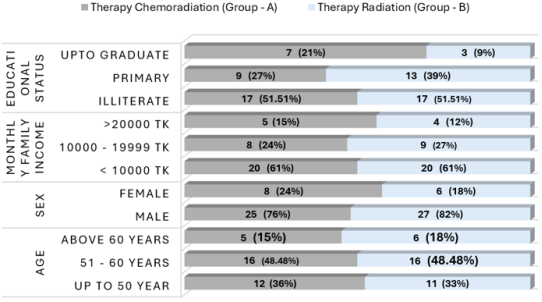
Figure 1 presents the socio-demographic characteristics of the study participants by treatment group. The mean age was 52.12 ± 10.25 years in the chemoradiation group and 51.84 ± 10.38 years in the radiation-alone group. Most patients in both groups were aged 51–60 years, male, from households with a monthly income below 10,000 Tk, and had no formal education. Male patients accounted for 75.75% of the chemoradiation group and 81.81% of the radiation-alone group.
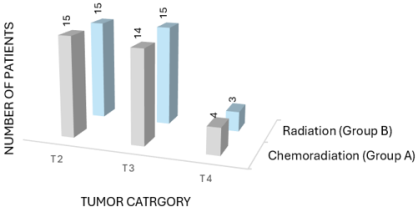
Figure 2 shows a similar tumour-category distribution between groups. In the chemoradiation group, T2, T3 and T4 disease were observed in 15, 14 and 4 patients, respectively; in the radiation-alone group, the corresponding numbers were 15, 15 and 3 patients.
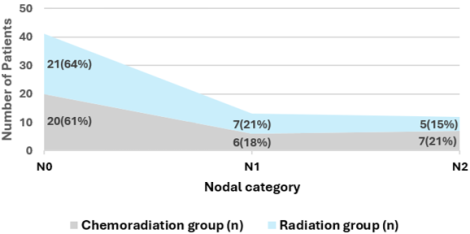
Nodal status was comparable between the two groups. In Group A, N0, N1, and N2 disease were observed in 60.6%, 18.2%, and 21.2% of patients, respectively, compared with 63.6%, 21.2%, and 15.2% in Group B (
Figure 3).
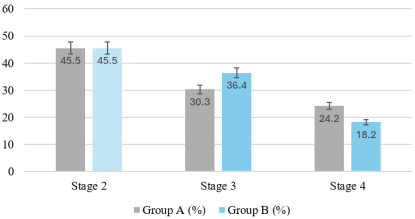
Stage II disease was the most frequent tumour stage in both groups, comprising 45.5% of patients in each group. Stage III and stage IVA disease were observed in 30.3% and 24.2% of patients in Group A, respectively, compared with 36.4% and 18.2% in Group B (
Figure 4).
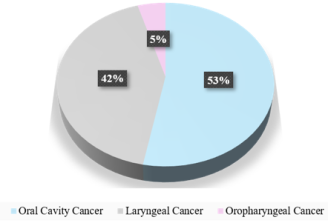
Figure 5 shows the distribution of head and neck cancer among the study patients. Of the 66 patients, oral cavity cancer was the most common site, affecting 35 patients (53.0%), followed by laryngeal cancer in 28 patients (42.0%) and oropharyngeal cancer in 3 patients (5.0%).
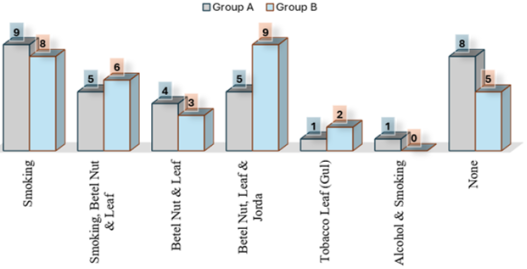
Figure 6 shows the distribution of risk factors by treatment group. In Group A, smoking alone was the most frequent risk factor, reported in 9 patients (27.3%), followed by combined smoking, betel nut and leaf use, and betel nut, leaf and jorda use, each in 5 patients (15.2%). In Group B, betel nut, leaf and jorda use was most common, reported in 9 patients (27.3%), followed by smoking alone in 8 patients (24.2%) and combined smoking, betel nut and leaf use in 6 patients (18.2%). No identifiable risk factor was reported in 8 patients (24.2%) in Group A and 5 patients (15.2%) in Group B.
Table 1 summarizes the local examination findings of the lump by treatment group. Tenderness was the most frequent finding in both Group A and Group B, observed in 15 patients (78.9%) and 14 patients (73.7%), respectively. Bleeding was present in 6 patients (31.6%) in Group A and 5 patients (26.3%) in Group B, while tumour fixation was observed in 5 patients (26.3%) and 2 patients (10.5%), respectively.
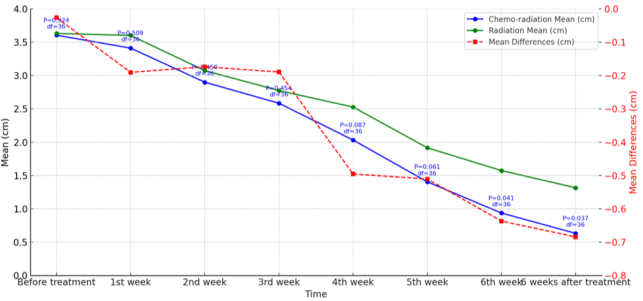
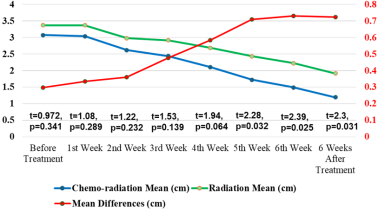
Figure 7 shows the weekly change in oral cavity tumour size between the two treatment groups. Baseline mean tumour size was comparable between Group A and Group B (3.605 cm vs 3.632 cm; p=0.924). Tumour size declined progressively in both groups, with a greater reduction observed in Group A from the fourth week onward. The between-group difference approached significance at week 5 (1.405 cm vs 1.916 cm; p=0.061) and became statistically significant at week 6 (0.937 cm vs 1.574 cm; p=0.041) and 6 weeks after treatment (0.632 cm vs 1.316 cm; p=0.037).
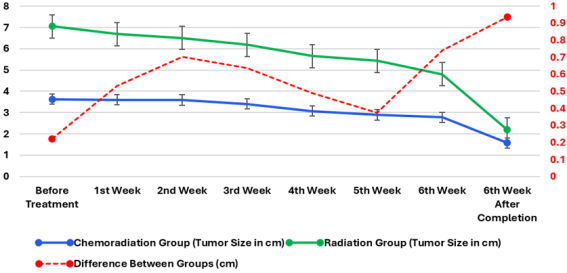
Figure 8 shows the weekly trend in oral cavity tumour size during treatment. Mean tumour size decreased progressively in both groups, from 3.605 cm to 0.937 cm in Group A and from 3.632 cm to 1.574 cm in Group B by week 6. The reduction was greater in the concurrent chemoradiation group, with the between-group difference increasing over the treatment period.
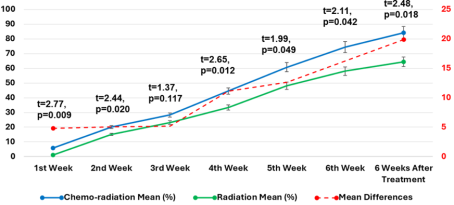
Figure 9 shows the weekly percentage of tumour regression in both treatment groups. Tumour regression increased progressively throughout treatment and remained higher in the concurrent chemoradiation group at all time points. At 6 weeks after treatment, mean regression was 84.26% in Group A compared with 64.39% in Group B, with a statistically significant between-group difference (p=0.018).
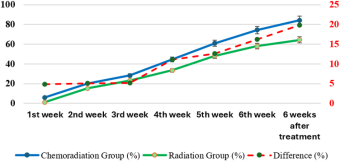
Figure 10 shows the weekly mean regression rate of oral cavity cancer by treatment group. Tumour regression increased progressively in both groups, but remained higher in the concurrent chemoradiation group throughout treatment. The between-group difference was relatively small up to week 3, then widened steadily, with the highest regression observed 6 weeks after treatment in Group A.
Figure 11 shows the weekly percentage of neck node regression among patients with nodal disease. Regression increased progressively in both groups, but was consistently higher in the concurrent chemoradiation group. The between-group difference became statistically significant from week 4 onward and remained significant at week 5, week 6, and 6 weeks after treatment, when mean regression was 65.69% in Group A compared with 41.25% in Group B (p=0.011).
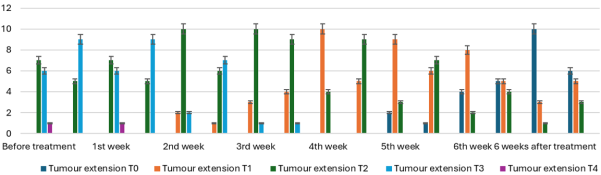
Figure 12 shows the weekly change in laryngeal tumour extension by treatment group. Baseline tumour extension was predominantly T2–T3 in both groups, with no change observed during the first week. Tumour downstaging began from week 2 and was more evident in the concurrent chemoradiation group. By week 4, T1 disease was observed in 71.4% of Group A compared with 35.7% of Group B, while 6 weeks after treatment, complete downstaging to T0 was observed in 71.4% and 42.9% of patients, respectively.
Table 2 shows the overall treatment response by treatment group. Complete response was observed in 22 patients (66.7%) in the concurrent chemoradiation group compared with 13 patients (39.4%) in the radiation group, while partial response was observed in 11 patients (33.3%) and 20 patients (60.6%), respectively. Overall treatment response differed significantly between the two groups, favouring concurrent chemoradiation (χ
2=4.92, df=1, p=0.048).
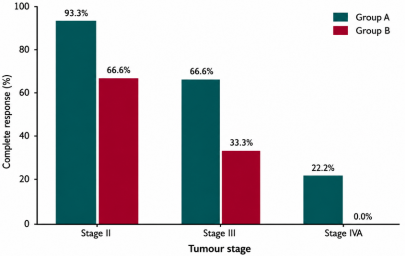
Figure 13 shows the complete response according to tumour stage in the two treatment groups. Complete response was consistently higher in Group A than in Group B across all stages. In stage II disease, complete response was observed in 93.3% of patients in Group A compared with 66.6% in Group B. The corresponding proportions in stage III were 66.6% and 33.3%, respectively, while in stage IVA, complete response was observed in 22.2% of patients in Group A and in none of the patients in Group B.
5. Discussion
This prospective comparative study evaluated early treatment response following concurrent chemoradiation versus radiation alone in patients with non-metastatic squamous cell carcinoma of the head and neck. The principal finding was that concurrent chemoradiation produced a higher complete response rate than radiation alone at 6 weeks after treatment completion. Complete response was observed in 66.7% of patients receiving concurrent chemoradiation compared with 39.4% of those receiving radiation alone, and the overall treatment response differed significantly between groups (p=0.048). Serial assessment also demonstrated a greater reduction in oral cavity tumour size, higher percentage tumour regression, greater nodal regression, and more marked laryngeal tumour downstaging in the concurrent chemoradiation group.
The baseline distribution of tumour category, nodal status and tumour stage was broadly comparable between the two treatment groups, supporting interpretation of the observed differences as treatment-related rather than solely due to baseline imbalance. Most patients had oral cavity or laryngeal cancer, and the predominant risk exposures were smoking and betel-related habits. This pattern is consistent with the established role of tobacco, smokeless tobacco, areca nut/betel quid and alcohol as major risk factors for head and neck squamous cell carcinoma, particularly in South Asian populations where smokeless tobacco and betel-related practices remain common
| [3] | Johnson, D. E., Burtness, B., Leemans, C. R., Lui, V. W. Y., Bauman, J. E., Grandis, J. R. Head and Neck Squamous Cell Carcinoma. Nature Reviews Disease Primers. 2020, 6(1), 92.
https://doi.org/10.1038/s41572-020-00224-3 |
| [4] | International Agency for Research on Cancer. A Review of Human Carcinogens: Personal Habits and Indoor Combustions. IARC Monographs on the Evaluation of Carcinogenic Risks to Humans, Volume 100E. Lyon, France: International Agency for Research on Cancer; 2012. |
[3, 4]
. The high proportion of patients from lower socioeconomic backgrounds also reflects the broader cancer-care challenges in Bangladesh, where delayed presentation, limited awareness and restricted access to specialist oncology services may affect treatment outcomes
.
The response kinetics observed in this study are clinically important. In oral cavity tumours, baseline tumour size was similar between groups, but the difference in tumour reduction became more evident from the later weeks of treatment and reached statistical significance at week 6 and 6 weeks after treatment completion. Similarly, percentage tumour regression was consistently higher in the concurrent chemoradiation group, with the between-group difference widening after week 3. Neck node regression followed a comparable pattern, becoming significantly greater in the concurrent chemoradiation group from week 4 onward. These findings support the biological rationale for concurrent chemotherapy as a radiosensitising strategy, enhancing tumour cell kill and improving locoregional response when delivered with definitive radiotherapy
| [8] | Pignon, J. P., Bourhis, J., Domenge, C., Designe, L.; MACH-NC Collaborative Group. Chemotherapy Added to Locoregional Treatment for Head and Neck Squamous-cell Carcinoma: Three Meta-analyses of Updated Individual Data. Lancet. 2000, 355(9208), 949-955.
https://doi.org/10.1016/S0140-6736(00)90011-4 |
| [9] | Pignon, J. P., le Maître, A., Maillard, E., Bourhis, J.; MACH-NC Collaborative Group. Meta-analysis of Chemotherapy in Head and Neck Cancer: An Update on 93 Randomised Trials and 17,346 Patients. Radiotherapy and Oncology. 2009, 92(1), 4-14. https://doi.org/10.1016/j.radonc.2009.04.014 |
| [10] | Lacas, B., Carmel, A., Landais, C., Wong, S. J., Licitra, L., Tobias, J. S., et al. Meta-analysis of Chemotherapy in Head and Neck Cancer: An Update on 107 Randomized Trials and 19,805 Patients. Radiotherapy and Oncology. 2021, 156, 281-293. https://doi.org/10.1016/j.radonc.2021.01.013 |
[8-10]
.
The superiority of concurrent chemoradiation observed in the present study is consistent with major randomized trials and meta-analyses in head and neck squamous cell carcinoma. The MACH-NC meta-analyses demonstrated that the survival benefit of chemotherapy is greatest when chemotherapy is delivered concurrently with radiotherapy rather than as induction or adjuvant treatment
| [8] | Pignon, J. P., Bourhis, J., Domenge, C., Designe, L.; MACH-NC Collaborative Group. Chemotherapy Added to Locoregional Treatment for Head and Neck Squamous-cell Carcinoma: Three Meta-analyses of Updated Individual Data. Lancet. 2000, 355(9208), 949-955.
https://doi.org/10.1016/S0140-6736(00)90011-4 |
| [9] | Pignon, J. P., le Maître, A., Maillard, E., Bourhis, J.; MACH-NC Collaborative Group. Meta-analysis of Chemotherapy in Head and Neck Cancer: An Update on 93 Randomised Trials and 17,346 Patients. Radiotherapy and Oncology. 2009, 92(1), 4-14. https://doi.org/10.1016/j.radonc.2009.04.014 |
| [10] | Lacas, B., Carmel, A., Landais, C., Wong, S. J., Licitra, L., Tobias, J. S., et al. Meta-analysis of Chemotherapy in Head and Neck Cancer: An Update on 107 Randomized Trials and 19,805 Patients. Radiotherapy and Oncology. 2021, 156, 281-293. https://doi.org/10.1016/j.radonc.2021.01.013 |
[8-10]
. Randomized studies by Adelstein and colleagues also showed improved disease control and primary-site preservation with concurrent chemoradiotherapy compared with radiotherapy alone in advanced squamous cell carcinoma of the head and neck
| [11] | Adelstein, D. J., Saxton, J. P., Rybicki, L. A., Esclamado, R. M., Wood, B. G., Strome, M., et al. A Phase III Randomized Trial Comparing Concurrent Chemotherapy and Radiotherapy with Radiotherapy Alone in Resectable Stage III and IV Squamous Cell Head and Neck Cancer. Head & Neck. 1997, 19(7), 567-575.
https://doi.org/10.1002/(SICI)1097-0347(199710)19:7%3C567::AID-HED2%3E3.0.CO;2-5 |
| [12] | Adelstein, D. J., Lavertu, P., Saxton, J. P., Secic, M., Wood, B. G., Wanamaker, J. R., et al. Mature Results of a Phase III Randomized Trial Comparing Concurrent Chemoradiotherapy with Radiation Therapy Alone in Patients with Stage III and IV Squamous Cell Carcinoma of the Head and Neck. Cancer. 2000, 88(4), 876-883.
https://doi.org/10.1002/(SICI)1097-0142(20000215)88:4%3C876::AID-CNCR19%3E3.0.CO;2-Y |
| [13] | Adelstein, D. J., Li, Y., Adams, G. L., Wagner, H. Jr., Kish, J. A., Ensley, J. F., et al. An Intergroup Phase III Comparison of Standard Radiation Therapy and Two Schedules of Concurrent Chemoradiotherapy in Patients with Unresectable Squamous Cell Head and Neck Cancer. Journal of Clinical Oncology. 2003, 21(1), 92-98. https://doi.org/10.1200/JCO.2003.01.008 |
[11-13]
. Although the present study was not designed to evaluate survival or durable locoregional control, the higher early complete response rate observed with concurrent chemoradiation is directionally consistent with this evidence base.
The findings are also relevant to organ-preservation treatment, particularly for laryngeal cancer. In this study, laryngeal tumour downstaging began from the second week and was more evident in the concurrent chemoradiation group. By 6 weeks after treatment, complete downstaging to T0 was observed in 71.4% of patients in the concurrent chemoradiation group compared with 42.9% in the radiation-alone group. This aligns with landmark organ-preservation evidence showing that concurrent cisplatin-based chemoradiotherapy can improve laryngeal preservation and locoregional control in appropriately selected patients with advanced laryngeal cancer
| [15] | Forastiere, A. A., Goepfert, H., Maor, M., Pajak, T. F., Weber, R., Morrison, W., et al. Concurrent Chemotherapy and Radiotherapy for Organ Preservation in Advanced Laryngeal Cancer. New England Journal of Medicine. 2003, 349(22), 2091-2098. https://doi.org/10.1056/NEJMoa031317 |
| [16] | Forastiere, A. A., Zhang, Q., Weber, R. S., Maor, M. H., Goepfert, H., Pajak, T. F., et al. Long-Term Results of RTOG 91-11: A Comparison of Three Nonsurgical Treatment Strategies to Preserve the Larynx in Patients with Locally Advanced Larynx Cancer. Journal of Clinical Oncology. 2013, 31(7), 845-852.
https://doi.org/10.1200/JCO.2012.43.6097 |
[15, 16]
. However, the present results should be interpreted as early clinical response rather than definitive evidence of long-term laryngeal preservation.
Complete response also varied by tumour stage. Response was highest in stage II disease and declined progressively in stage III and stage IVA disease in both groups. Nevertheless, complete response remained higher in the concurrent chemoradiation group across all stages. This stage-response gradient is expected, as increasing tumour burden and more advanced locoregional disease are associated with lower probability of complete clinical regression. The stage-specific findings emphasize the importance of early diagnosis and timely treatment initiation, especially in resource-limited settings where patients may present late because of socioeconomic barriers, low awareness and limited access to oncology facilities
.
The complete response rate in the concurrent chemoradiation group in this study is comparable with regional data using cisplatin-based concurrent treatment. Lone et al. reported an overall response rate of 88.8% and a complete response rate of 57.7% among patients with locally advanced head and neck squamous cell carcinoma treated with weekly cisplatin and radiotherapy, with generally manageable acute toxicity
| [23] | Lone, M. M., Malik, T. R., Afroza, F., Khan, N. A., Haq, M. M., Patigaroo, A. R. Treatment Outcome with Weekly Cisplatin Concurrent with Radiation Therapy in Locally Advanced Head and Neck Squamous Cell Carcinoma. JIMSA. 2012, 25, 159–161. |
[23]
. Although treatment schedules and patient populations differ, both studies support the feasibility and activity of cisplatin-based concurrent chemoradiation in South Asian clinical contexts. The present complete response rate of 66.7% with concurrent chemoradiation is therefore clinically plausible and consistent with the wider evidence that adding chemotherapy improves early tumour response.
Toxicity is an important consideration when interpreting these findings. Concurrent chemoradiation is known to improve tumour response but at the cost of increased acute adverse effects, including mucositis, dysphagia, nausea, vomiting, xerostomia, skin reaction, haematological toxicity and renal dysfunction
| [13] | Adelstein, D. J., Li, Y., Adams, G. L., Wagner, H. Jr., Kish, J. A., Ensley, J. F., et al. An Intergroup Phase III Comparison of Standard Radiation Therapy and Two Schedules of Concurrent Chemoradiotherapy in Patients with Unresectable Squamous Cell Head and Neck Cancer. Journal of Clinical Oncology. 2003, 21(1), 92-98. https://doi.org/10.1200/JCO.2003.01.008 |
| [17] | Machiels, J. P., Leemans, C. R., Golusinski, W., Grau, C., Licitra, L., Gregoire, V. Squamous Cell Carcinoma of the Oral Cavity, Larynx, Oropharynx and Hypopharynx: EHNS-ESMO-ESTRO Clinical Practice Guidelines for Diagnosis, Treatment and Follow-up. Annals of Oncology. 2020, 31(11), 1462-1475. https://doi.org/10.1016/j.annonc.2020.07.011 |
| [18] | Szturz, P., Vermorken, J. B., Licitra, L., Bhide, S., Dinis, J., Bourhis, J., et al. Cisplatin Eligibility Issues and Alternative Regimens in Locoregionally Advanced Head and Neck Cancer: Recommendations for Clinical Practice. Frontiers in Oncology. 2019, 9, 464. https://doi.org/10.3389/fonc.2019.00464 |
[13, 17, 18]
. In the present study, acute adverse effects were mainly nausea, vomiting, xerostomia, mucositis and mild anaemia, and no severe unexpected toxicity was reported. These toxicities were managed conservatively. This suggests that concurrent chemoradiation was tolerable in the selected study population; however, the short follow-up period and limited sample size restrict firm conclusions regarding late toxicity, treatment-related functional impairment or long-term safety. Careful patient selection remains essential, particularly for cisplatin-based treatment, because renal dysfunction, hearing impairment, poor performance status, older age, comorbidity and poor nutritional reserve may limit cisplatin eligibility
| [18] | Szturz, P., Vermorken, J. B., Licitra, L., Bhide, S., Dinis, J., Bourhis, J., et al. Cisplatin Eligibility Issues and Alternative Regimens in Locoregionally Advanced Head and Neck Cancer: Recommendations for Clinical Practice. Frontiers in Oncology. 2019, 9, 464. https://doi.org/10.3389/fonc.2019.00464 |
[18]
.
From a practical perspective, the findings support the use of concurrent chemoradiation in suitable patients with non-metastatic head and neck squamous cell carcinoma when adequate supportive care and monitoring are available. However, radiation alone remains clinically relevant for patients who are unfit for chemotherapy or in settings where chemotherapy cannot be delivered safely. This distinction is particularly important in Bangladesh and similar resource-constrained oncology settings, where treatment decisions must balance efficacy, toxicity, affordability, treatment completion and access to follow-up care
. Therefore, the results should be interpreted not as a universal recommendation for all patients, but as evidence that concurrent chemoradiation can provide superior early tumour response in appropriately selected patients.